

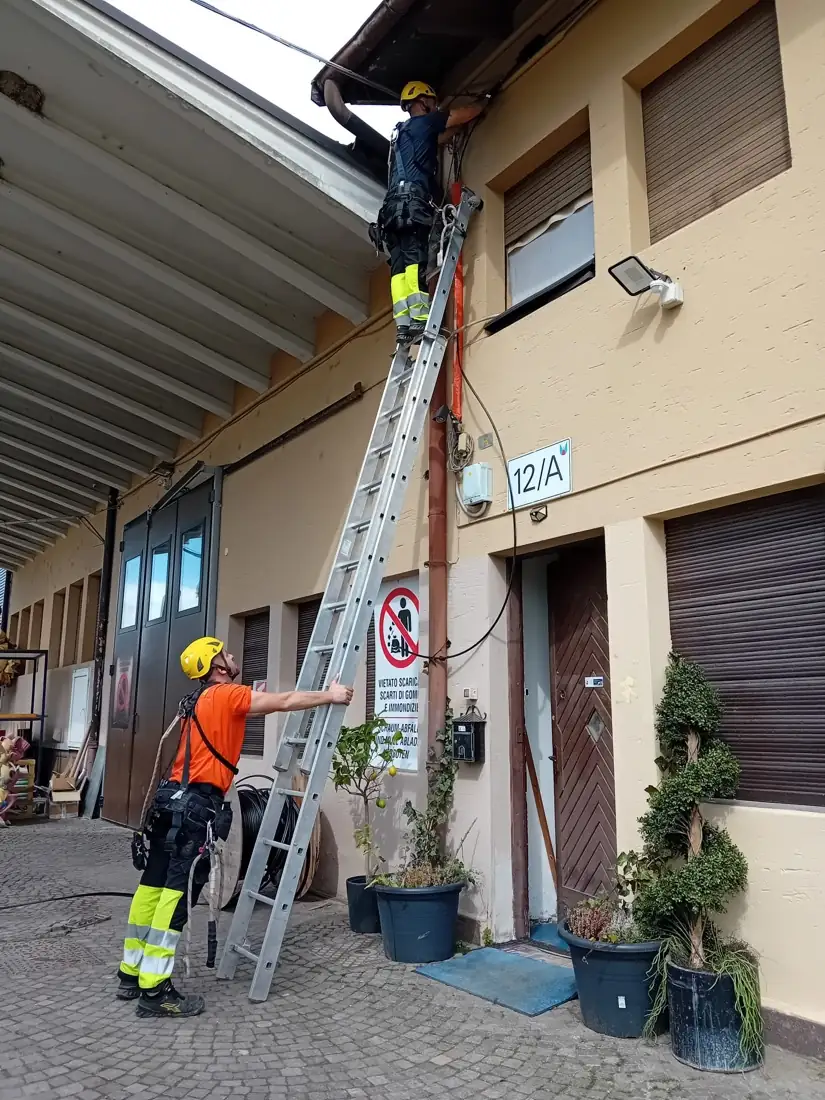
An electrical or fibre network almost never fails suddenly. In the vast majority of cases the fault is the final act of a deterioration that began months or years earlier: a terminal working loose and heating up, a cracked insulator, water getting into a chamber, a branch growing progressively closer to an overhead line. Scheduled maintenance exists to catch these situations while they are still small.
A well-built maintenance plan starts from knowing the installation. It needs up-to-date drawings, a record of work already carried out, and a classification of components based on the consequences of their failure: not everything deserves the same inspection frequency, and concentrating resources where the risk is greatest is more effective than inspecting everything in the same way.
On electrical installations the typical checks include visual inspection of substations and switchboards, verification of connection tightness, testing of protection devices and earthing systems, and cleaning and checking the environmental conditions of technical rooms. Thermographic surveys are particularly useful: a hot spot on a connection is visible long before the joint fails.
On fibre networks maintenance mainly concerns the passive infrastructure: the condition of chambers and covers, the sealing of splice closures, the integrity of ducts, and periodic testing of sections with attenuation measurements compared against the acceptance values. A progressive drift signals a problem well before the link goes down.
On overhead lines, finally, what counts is inspection of the supports and control of clearance from vegetation, which in our valleys is the most frequent cause of interruption during storms and heavy snowfall.
We offer tailored plans, with frequencies agreed according to the importance of the installation, a written report after every visit, and availability for emergencies. For anyone running a service the advantage is not only technical: it is being able to schedule downtime instead of suffering it.
From the blog
Work with us: we're looking for new talent
We are looking for technical profiles to join our growing team.

How to choose the right partner for your networks
The criteria that make the difference when entrusting a public-utility work.

Innovation and quality in our works
How technology and method improve every job site.